

Decoding the Rhythm of Global Workforces
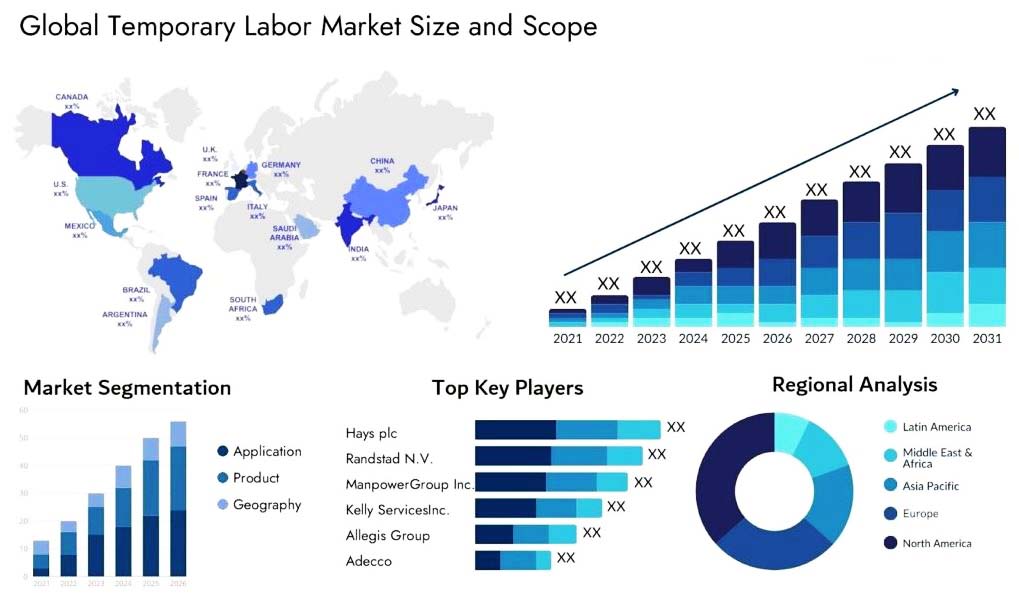
Labor Dynamics Reveal the Hidden Architecture of Modern Economies
The Anatomy of Employment and the New Definition of Work
Employment has always mirrored civilization. The ways in which people labor, earn, and adapt reveal not only the health of economies but the direction of progress itself. In the industrial age, work was measured by production. In the digital age, it is measured by connection, creativity, and data. Labor markets are no longer static exchanges of time for money but evolving ecosystems of skills, technology, and identity. The anatomy of employment now stretches beyond factories and offices into virtual networks where geography dissolves and adaptability defines worth. The concept of a “job” has transformed into something fluid, influenced by algorithms, automation, and global interdependence. Understanding this transformation requires more than counting employment rates. It demands a deeper reading of what work now means, how it is distributed, and why its value continues to fragment and reform across generations.
Today’s labor market operates within paradoxes. Employment expands yet inequality widens. Productivity soars while job satisfaction stagnates. Remote work democratizes opportunity yet deepens isolation. The anatomy of work, once predictable, now pulses with uncertainty. To analyze it is to trace the rhythms of change that define not just economies but entire social fabrics.
The Forces That Shape Labor Supply and Demand
Labor markets function as living systems, constantly adjusting to economic, demographic, and technological pressures. On one side lies supply, the people, skills, and motivations that populate the workforce. On the other lies demand, the needs of employers, industries, and consumers. The tension between these forces determines wages, employment levels, and innovation. During periods of expansion, demand outpaces supply, creating wage growth and competition for talent. In contraction, supply exceeds opportunity, leading to stagnation and uncertainty. Yet the simplicity of this balance belies the complexity beneath it. Migration, education, regulation, and digital disruption all alter the equilibrium, reshaping how economies absorb and reward labor.
Globalization introduced unprecedented flexibility, enabling companies to hire across borders and workers to compete across continents. The result is both efficiency and volatility. Skills become the currency of employment, but access to skill development remains unequal. Economies with robust educational systems adapt quickly, while those without struggle to keep pace. Understanding labor dynamics therefore requires seeing workers not as static participants but as agents navigating an ever-changing exchange of value. Their adaptability determines the strength of entire nations.
The Impact of Technology on Employment Structures
Technology has rewritten the map of labor. Automation, artificial intelligence, and digital platforms have redefined not only which jobs exist but how they are performed. Tasks once bound to human repetition are now handled by algorithms that learn faster and cost less. Yet rather than rendering human work obsolete, technology has fragmented it. Instead of full-time stability, many workers now participate in project-based, gig-oriented, or hybrid arrangements. The boundary between employment and entrepreneurship blurs as individuals become both laborers and brands, both creators and commodities within digital marketplaces.
This transformation has advantages and costs. Flexibility empowers workers to design their schedules, explore multiple income streams, and operate across industries. However, it also dismantles traditional protections, pensions, healthcare, and job security. Labor market analysis must therefore consider not only the number of people employed but the quality and sustainability of their work. Technology’s promise of efficiency is inseparable from its challenge of equity. As economies accelerate toward automation, the central question becomes how to preserve human purpose in systems increasingly driven by code.
The Evolution of Skills and the Currency of Knowledge
Skills have become the true wealth of nations. In earlier eras, capital and land determined power. Today, the ability to learn, adapt, and innovate defines success. The half-life of professional skills continues to shrink as industries evolve faster than educational systems can respond. A skill relevant five years ago may now be obsolete. Continuous learning is no longer optional but existential. Companies invest in training not merely as retention strategy but as survival tactic. Workers, in turn, must treat knowledge as a renewable resource rather than a fixed asset acquired in youth.
This evolution blurs the line between education and employment. Apprenticeships, micro-certifications, and online platforms create ecosystems where learning follows demand rather than precedes it. Nations that integrate education with market foresight cultivate resilience. Those that fail to align curricula with economic need risk producing mismatched generations, graduates equipped for industries that no longer exist. The future of labor will belong not to those who memorize, but to those who reimagine. Skills, once a means to stability, are now the instruments of perpetual transformation.
The Globalization of Labor and the Rise of Distributed Economies
Global connectivity has untethered the labor market from geography. A software engineer in Lagos can serve clients in London, while a designer in Jakarta collaborates with teams in New York. Remote collaboration tools have turned distance into a variable of convenience rather than constraint. This redistribution of opportunity has allowed developing nations to participate directly in global value chains without mass relocation. Yet globalization also creates asymmetries. While capital moves freely across borders, labor remains constrained by policy, culture, and infrastructure.
Distributed economies challenge traditional models of taxation, regulation, and compensation. How does one define jurisdiction in a digital workplace? Which government protects the worker who belongs everywhere and nowhere? These questions redefine the meaning of citizenship and responsibility in an interconnected world. The globalization of labor offers vast opportunity but demands ethical recalibration. As work becomes borderless, so must the frameworks that ensure fairness, security, and accountability. Without this, the promise of global inclusion risks becoming a new form of inequality.
The Social Dimension of Employment
Labor markets are not purely economic mechanisms; they are social ecosystems that shape identity, stability, and belonging. Work influences mental health, family dynamics, and civic participation. Periods of mass unemployment often correlate with political unrest and social fragmentation. Conversely, inclusive labor markets foster cohesion, providing citizens with both income and purpose. The design of employment policy therefore extends beyond wages and productivity. It touches on dignity, community, and collective confidence.
Modern challenges such as aging populations, automation, and migration demand not only statistical analysis but social imagination. Policymakers must address how work connects individuals to meaning. Universal basic income, shorter workweeks, and cooperative ownership models represent experiments in redefining this connection. As automation reduces the need for human labor in certain sectors, societies must decide whether work remains a prerequisite for worth or whether value can exist beyond employment. The answers to these questions will determine the emotional sustainability of future economies.
The Role of Policy and Data in Labor Market Intelligence
Effective labor market policy depends on accurate information. Governments rely on data to identify employment trends, skill shortages, and regional disparities. However, traditional metrics, such as unemployment rates, fail to capture the complexity of modern labor. They overlook informal work, gig economy participation, and underemployment. Advanced analytics now allow economists to track real-time hiring, wage trends, and skill migration using digital footprints. Artificial intelligence processes these vast datasets to forecast disruptions before they occur, allowing policymakers to respond with agility.
Yet data alone is insufficient. Interpretation requires context, transparency, and accountability. The collection of employment data raises ethical concerns about privacy and consent. Moreover, algorithms trained on biased information can perpetuate inequality by reinforcing existing disparities. Labor market intelligence must therefore balance precision with principle. The goal is not merely to measure employment but to understand it in human terms, who works, how they work, and whether their work contributes to shared prosperity.
The Cultural Transformation of the Workforce
Culture defines the emotional architecture of labor. Generational shifts have reconfigured expectations about purpose, flexibility, and fulfillment. Millennials and Generation Z prioritize autonomy and ethical alignment over loyalty and hierarchy. Companies once valued longevity; now they compete for engagement. Hybrid work has introduced new rituals, from virtual collaboration to asynchronous communication, altering how employees perceive belonging. Culture has become both strategy and asset. It determines retention as much as compensation does.
However, cultural evolution introduces tension between tradition and transition. Older institutions struggle to reconcile remote management with legacy structures, while younger organizations experiment with flat hierarchies that risk ambiguity. Balancing freedom with coherence becomes the challenge of the modern workplace. Labor markets no longer compete solely on salaries but on identity. The question has shifted from “where do you work?” to “why do you work?” In that shift lies the future narrative of employment, a story of values redefined as productivity reimagined.
The Horizon of Human Capital
The labor market of tomorrow will not be a continuation of today but a reinvention shaped by resilience, technology, and empathy. As automation absorbs repetitive tasks, human capital will concentrate around creativity, critical thinking, and care. The boundary between work and life will blur further, not through exploitation but through integration. Economic success will depend on how societies distribute opportunity, not just how they measure output. The horizon of human capital stretches toward a world where value derives from adaptability, inclusion, and imagination. Those who read the pulse of this transformation not as disruption but as evolution will shape the next era of prosperity, one where work, finally, serves both economy and humanity in equal measure.